Running a small business in 2026 means dealing with rising costs, late payments, and economic ups and downs that hit harder than ever. One late invoice or surprise expense can turn a good month into a scramble.
The fix most successful owners swear by? Cash flow forecasting a straightforward way to see money coming in and going out weeks or months ahead.
It’s not magic. It’s just visibility. And once you have it, decisions that used to feel like gambles become straightforward.
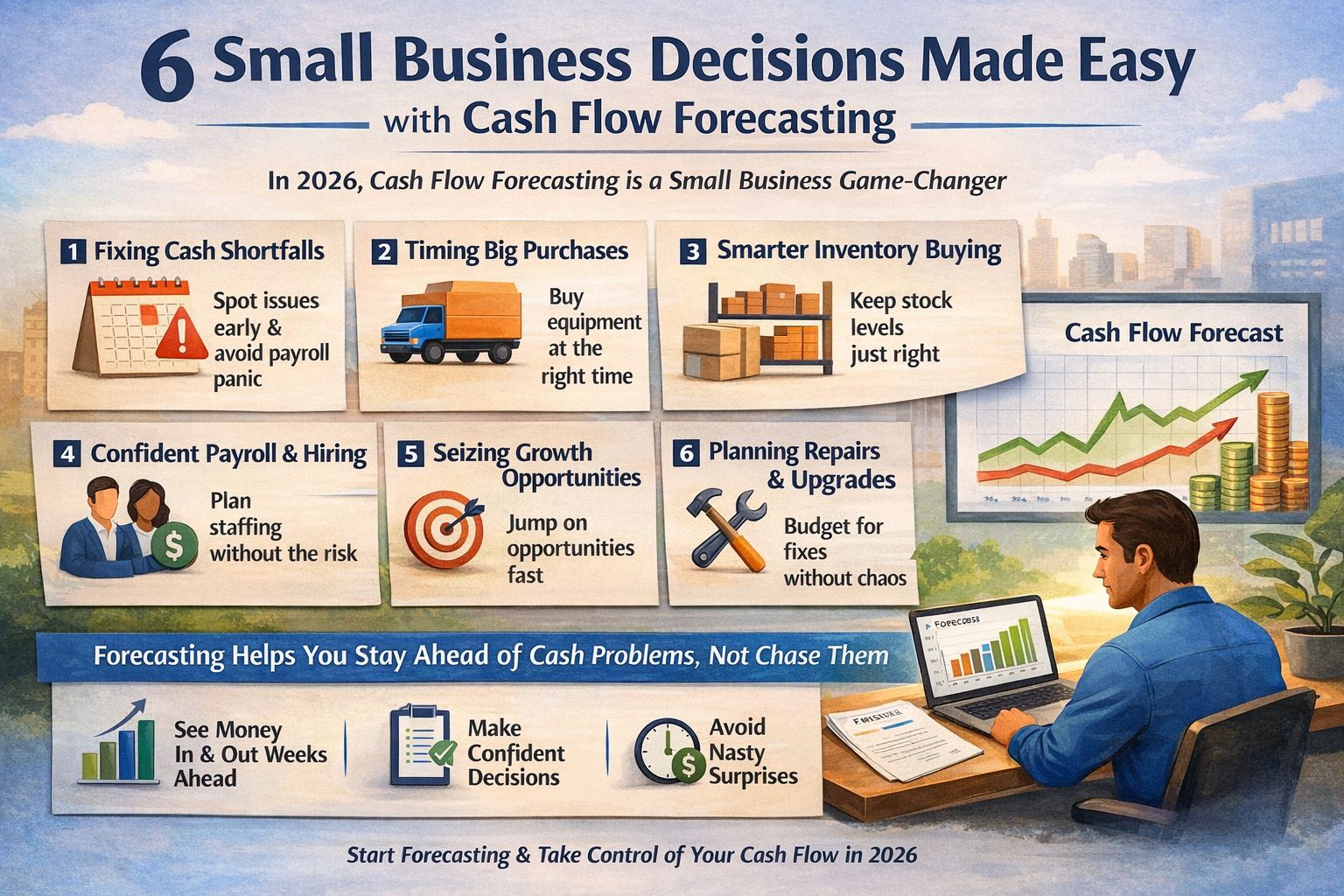
Here are the 6 biggest small business decisions that get way easier with regular cash flow forecasting.
1. Spotting & Fixing Cash Shortfalls Before They Hurt
No more Friday panic when payroll’s due but clients haven’t paid. A good forecast (even a simple 13-week rolling one) flags negative cash periods early giving you time to chase invoices, negotiate vendor terms, or tap a line of credit on your schedule, not theirs.
2. Timing Big Purchases Without Draining Reserves
New equipment, vehicles, software, or marketing pushes? Forecasting shows exactly when you’ll have the cash buffer to handle the hit or if it’s smarter to finance and spread it out. No more buying on hope and regretting it later.
3. Smarter Inventory Buying (No More Overstock Nightmares)
Too much inventory ties up cash; too little kills sales. Use your forecast to match purchases to expected revenue especially with supply chain delays still common in 2026. It’s the difference between healthy stock levels and a warehouse full of dead money.
4. Confident Payroll & Hiring During Slow Seasons
Hiring feels risky when cash is tight. Forecasting lets you see if you can afford that new team member through the slow months or hold off until collections pick up. It also helps plan bonuses or raises without surprise shortfalls.
5. Seizing Growth Opportunities When They Appear
A big client wants more volume? Competitor closes shop? New location opens? Owners who forecast know their real cash position fast they can say yes and fund it, instead of watching the opportunity slip away.
6. Planning Renovations, Upgrades & Compliance Without Chaos
Roof needs fixing? Machines breaking? New regs hitting? Forecasting helps time these expenses so they don’t wreck your day-to-day cash. You can even decide if short-term funding makes sense to keep operations smooth.
Why Cash Flow Forecasting Matters More in 2026
Margins are thinner, interest rates fluctuate, and unexpected costs (insurance hikes, supply prices) keep popping up. Forecasting turns reactive firefighting into proactive planning. It also makes lenders and investors happier—accurate forecasts prove you’ve got your numbers under control.
Quick Start Tip for Small Businesses Don’t overcomplicate it. Pull last 12 months of bank statements and sales data. Block 45 minutes. Project inflows conservatively, outflows realistically. Update monthly (or weekly for tight cash). Tools like QuickBooks, Xero, or free templates work great no need for fancy software.
Quick FAQ: Cash Flow Forecasting Basics
What is cash flow forecasting for small business? It’s predicting your future cash inflows (sales, payments) minus outflows (bills, payroll) over weeks or months.
How often should I update my cash flow forecast? At least monthly; weekly if cash is tight.
Do I need special software? No start with Excel or your accounting tool. Many have built-in templates.
How does forecasting help avoid cash flow problems? It gives early warnings so you can act instead of react.
Cash flow forecasting isn’t about predicting the future perfectly it’s about removing surprises so you can focus on growing your business.
If you’re dealing with tight cash right now or planning a big move in 2026, start forecasting this week. Your future self (and your bank account) will thank you.
DISCLAIMER: This content is for informational purposes only. Gate Rock Capital and its affiliates do not provide financial, legal, tax or accounting advice.